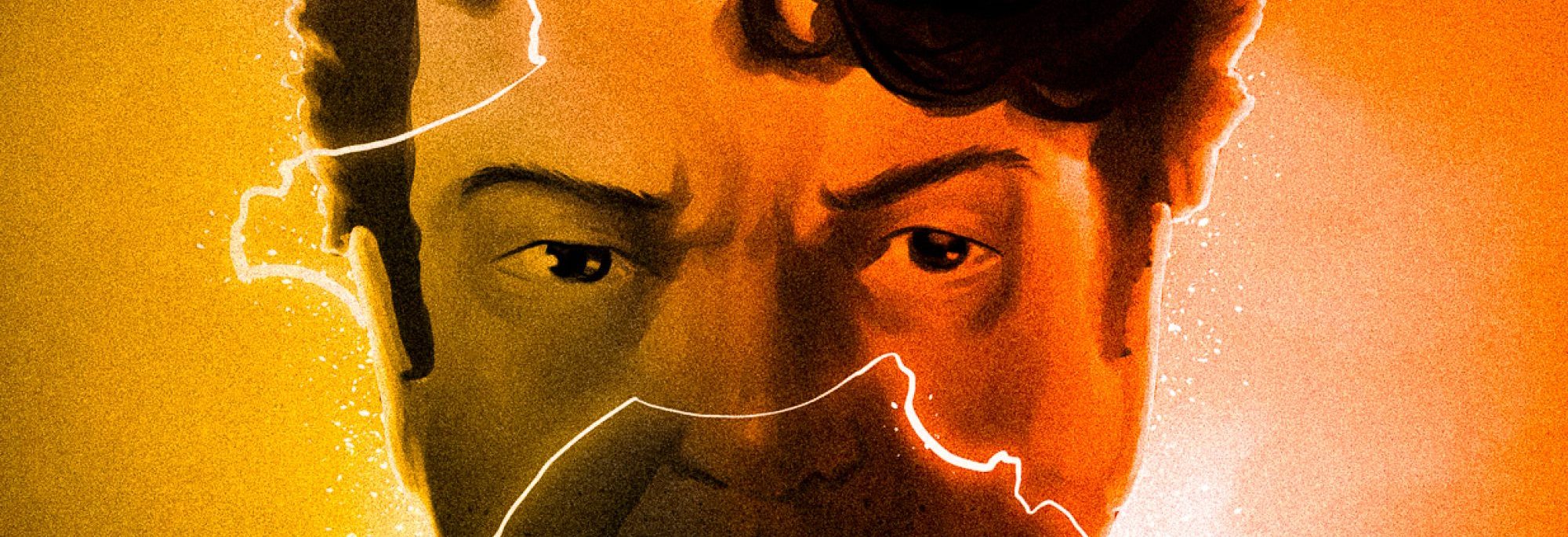

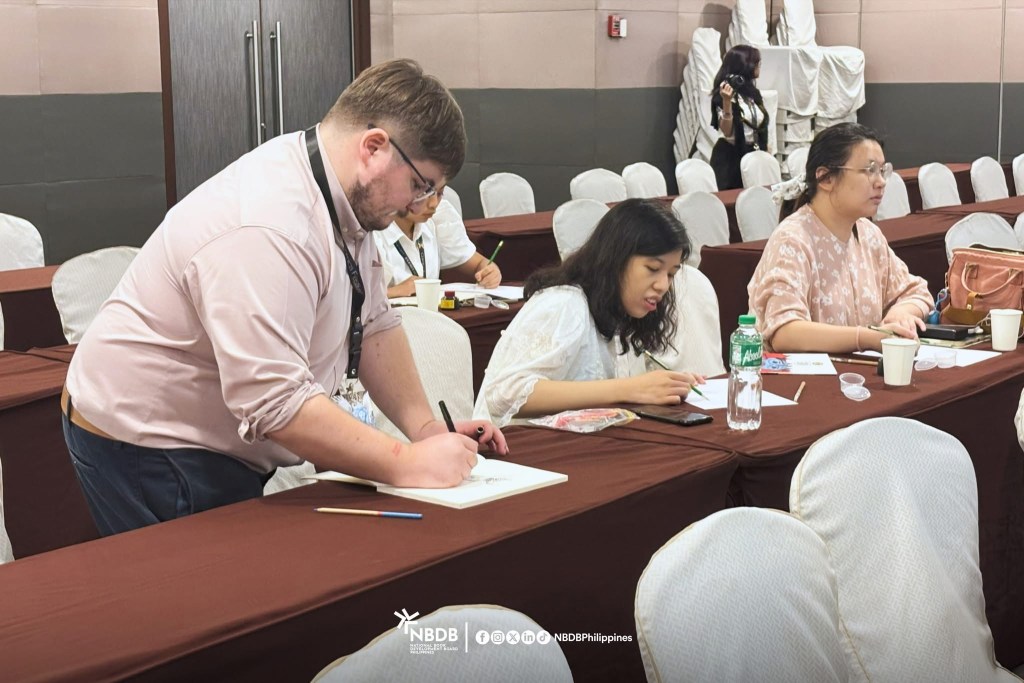
I was invited to appear as a guest and teach a specialist comics masterclass at PICOF 2025, on July the 5th and 6th.
Forming the masterclass
I was told that the masterclass must be based in practice, rather than pure theory – there must be an element where the participants create work. I’ve always been fascinated with how our brains process images and stimuli, why are we so predisposed to attribute meaning to mark making and brush strokes?
This line of questioning lead me to Neil Cohn, a cognitive scientist and comics theorist who has performed extensive academic research relating our brain activity to reading sequential images such as comics. His work mostly focuses on the concept of visual grammar and language, which he connects with the semantic processes that our brains perform when taking in visual information, simultaneously our brains perform another process – a narrative process.
Semantic Process
Our brain’s semantic process deals with attributing meaning to concepts, as well as comparing our visual stimulus to previously witnessed stimuli from our semantic memory banks, very much a “contrast and compare” process, deciding whether this is something we recognise or something new to add to the bank
Narrative/ Linear Process
Cohn describes the narrative process as such: first your brain decides on a narrative category, which kind of narrative are we observing? an establishing shot? and initial panel? etc. Then we enter the narrative constituents check, looking at where the brain will place the image in the hierarchy of the full strip, lastly our minds enter the structural revision section, where we reassess the narrative structure of the strip with each new piece of information.
Rethinking the brain and images
Despite the usefulness and prevalence of Cohn’s work, I felt that I needed an introduction that gives a more easily assessable gateway for the participants to accept these concepts, as my participants could be mixed age, background and ability. I needed to ease into the idea of blending scientific elements alongside artistic principles, to do this I started by framing the masterclass in the idea of the “third culture”
The Third Culture
During my bachelors degree at the University of Portsmouth we had a visual culture unit focused on the idea of the “Third culture” an idea that jumps off of the work of scientist and writer C.P Snow, more specifically, his concepts introduced in his 1959 lecture “The Two Cultures” and his follow up book “the Two Cultures and the Scientific Revolution”. In his work he explored the idea that the western world had been academically split in two, one culture representing the sciences (something these days we may refer to as STEM) and the humanities – each culture choosing to believe they’re the bastion and pinnacle of what western civilisation can offer, but are ultimately underperforming because they choose to work separately instead of cooperatively. For me, this was the perfect framing device for a masterclass about blending neuroscience and sequential illustration.
Comics can help us understand the human brain, Neuroscience can help us make more engaging comics. Assuming that your audience is human.
Practical examples
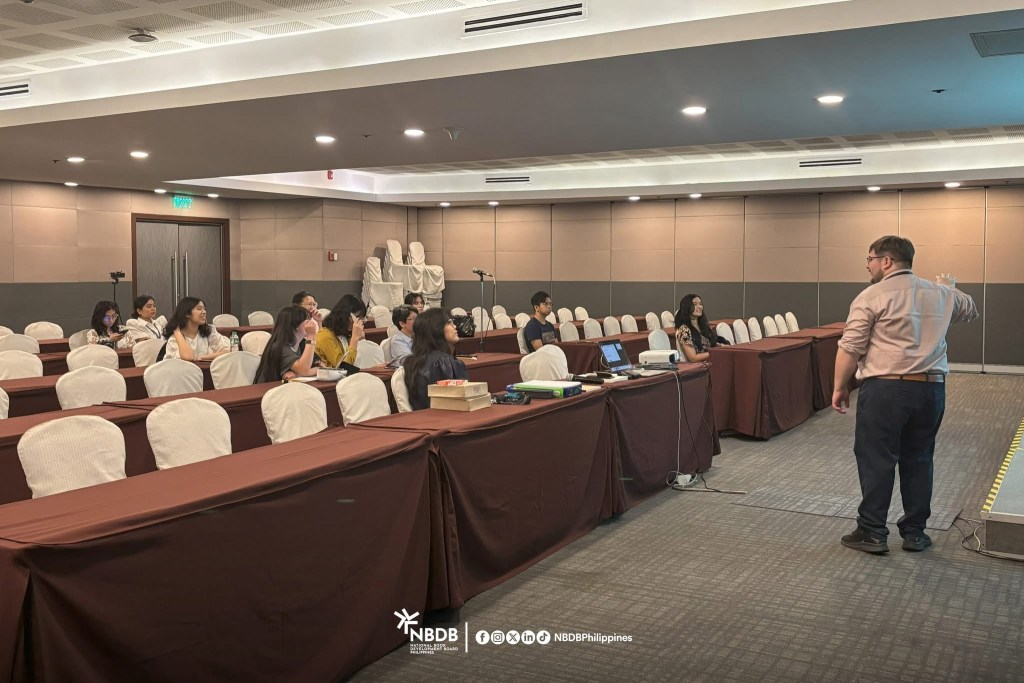
Although I was unsure of who exactly my participants will be, I made the safe assumption that they at least read comics and engage with visual arts to a certain degree. It was in my best interest for the “on boarding” process for the masterclass that I choose relevant and practical examples to introduce the concepts used later. This can be done effectively by “planting the seeds” of concepts that get capitalised on later in the class, once example for the masterclass was my use of the Philippines language – Tagalog.
I started the masterclass (after a brief introduction of who I am) with a short series of sentences I’d written in my notes, with the help of some friendly Philippines colleagues of mine correcting my language. I said my piece which went as such: ” Magandang umaga, salamat sa pag imbita nyo sa akin. Hindi ako magaling magtagalog. Itutuloy ko na ngayon sa English, salamat.” Which roughly translates to “Good morning, thank you for inviting me here today. My tagalog isnt very good, so I’ll continue in English. Thank you” . This wasn’t just done to build goodwill with my majority Philippine (but not exclusively) audience, but to plant a seed for a concept I was going to use later on. It’s no mystery that I don’t understand Tagalog, I can read the words because of my semantic memory telling me how consonants and vowels sound in the latin alphabet, however my semantic memory fails me when it comes to actually attributing meaning to the sounds of words.
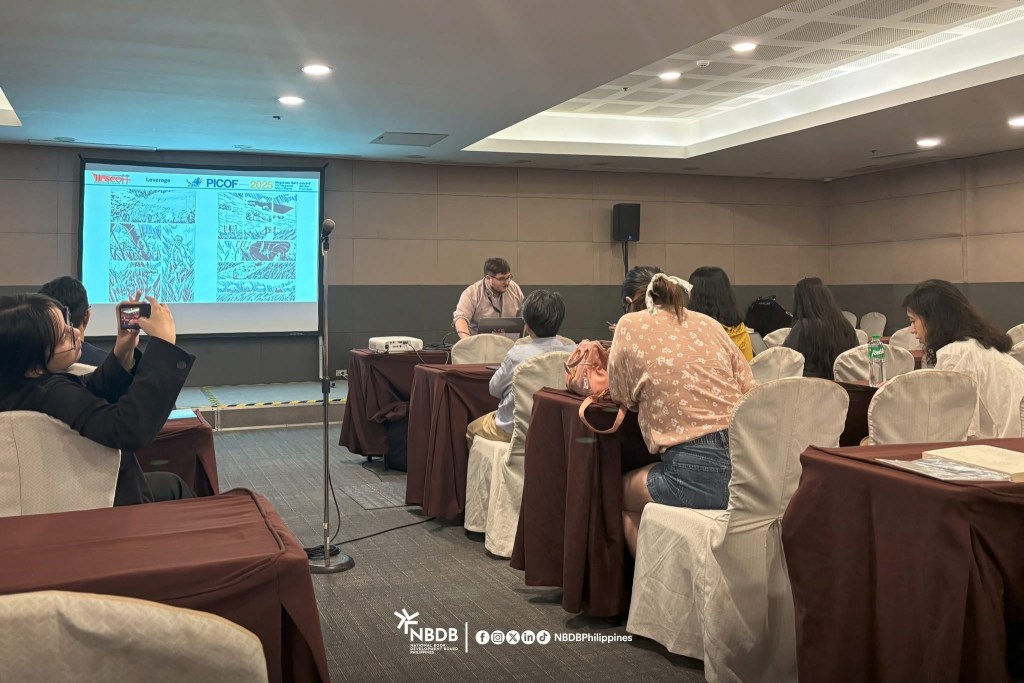
I further explained my ideas visually by using a colour blindness test, then expanding on those by showing the two major types of “Achromatopsia” (the ailment where colours may be absent or displayed differently) – Congenital (inherited, stemming from an issue with the photoreceptor cells in the retina) and Cerebral (developed after suffering brain damage to the visual cortex). this demonstrated that despite a person having perfect vision, it is the human brain that actually chooses and decides how we perceive the world around us.
Differentiation
If possible, it’s always to the instructor’s benefit to differentiate the examples of a concept, you want maximum on boarding for your sessions. I accompanied the colour blindness tests examples with two others. The first was Stereopsis (Our ability to use Binocular vision to perceive depth) this was a safe choice, as one can usually assume a low number of cycloptic participants at any one time. Demonstrating that it’s our brain that uses visual feeds from both eyes and then calculates distance between objects helped to reinforce the idea of the brain ultimately being in control. This example was complimented with my own anaglyphic 3D comic-zine “Xeno” with examples in the presentation and a hard copy circulating the participants
My last example was sex recognition, in which I displayed an image of a face with low contrast values, and another with high contract values – and asked the participants which did they think read as male or female. This illustrated that our brain will look for contrast when comparing the face of a person to determine their perceived sex.
The masterclass went into deeper detail on the link between the human brain and images, touching on such concepts as: neural processing between line and contour, illusory contours, the Ehrenstein illusion, positive and negatives space, and more. Participants practiced these techniques on stand alone illustrations before working on a final outcome.
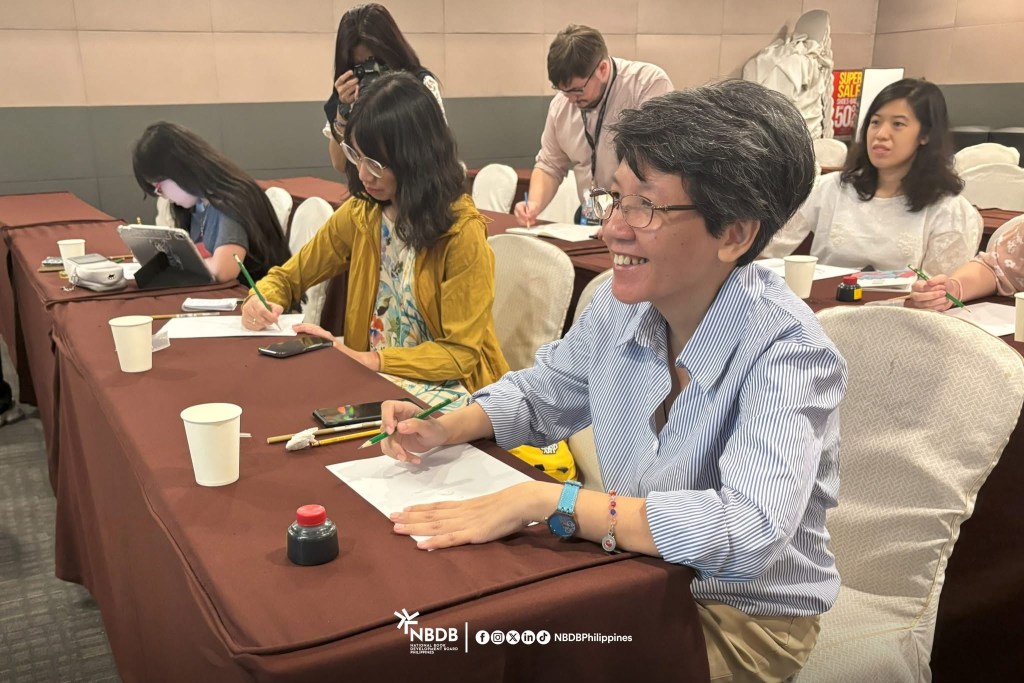
Final outcome
The final outcome of the masterclass was a comics page that leveraged the neurological phenomena of “Pareidolia” to plant semantic seeds and install meaning in visual stimuli that otherwise would have none, to form a subliminal link to a narrative moment in a previous part of the story.
Post-masterclass
After the masterclass had concluded, I was free to network and meet the attendees as a guest at booth no. B10, which resulted in some wonderful memories and new compatriots, as well as sketches for attendees.
The Art battle
Pre-festival I agreed to partake in what PICOC refer to as an “Art battle”, which is an event on the main stage where two delegates face off by drawing around a common theme and have the crowd decided on the winner (although, the actual winner is kept vague, as the event is for fun and not meant to decide a grand champion). I was set up again Ken Foo, a Singaporean comics artist who drew and authored the wonderfully funny and absurd “Cockman”. Ken and I were given the brief of drawing similar illustrations about us talking about our respective cultures, which then connect in the middle.
It was a bit of a tough brief for me, not that I don’t know or enjoy my culture, but the British self deprecation in me made it slightly difficult to bring up positive points in earnest, meanwhile Ken’s seemed to find that genuine quality the spoke to his culture and was well received by the Southeast asian crowd at the event. In an attempt to stay relevant to comics and being British, I threw in a reference to science fiction anthology 2000AD and Judge Dredd – which went as well as you may be thinking. Turns out that 2000AD hasn’t really made an impact into the asian markets, although one generous attendee raised his hand a proudly proclaimed “That’s where Judge Dredd comes from” as much as to give the nervous British man some kind of pity. This is not to say I didn’t enjoy the Art Battle, it was great fun and the crowd enjoyed the pageantry of the whole affair.
 jjscottillustration.co.uk